Garage Epoxy Floor Coatings in Fishers, Indiana: Epoxy vs Polyaspartic, Costs & What to Expect
Walk into almost any upgraded home in Fishers or Carmel and you'll notice the same thing in the garage: a high-gloss, flake-finished epoxy floor that transforms what used to be a dull concrete slab into something that looks like it belongs in a car dealership or luxury home magazine. If you're considering this upgrade, here's everything you need to know.
Epoxy vs. Polyaspartic: What's the Difference?
These two products are often confused, and some contractors use the terms interchangeably (incorrectly). Here's the real difference:
- Epoxy: A two-part coating (resin + hardener) that creates an extremely durable, chemical-resistant surface. Standard epoxy takes 3–5 days to fully cure and is sensitive to temperature and moisture during application. Less UV-stable than polyaspartic — can yellow over time in direct sunlight.
- Polyaspartic: A newer formulation that's more flexible, more UV-stable, and cures much faster — allowing single-day installation. Also harder and more scratch-resistant than standard epoxy. Generally costs 20–40% more but is worth the premium for most homeowners.
At Homerix Inc, we use professional-grade polyaspartic systems for most of our Fishers and Carmel installs because they perform better long-term in Indiana's climate (freeze-thaw cycles, hot summers).
What Does Garage Epoxy Cost in Fishers, IN?
Pricing varies based on garage size, prep requirements, and system chosen:
- Standard 1-car garage (200–250 sq ft): $1,200–$1,800
- Standard 2-car garage (400–500 sq ft): $2,000–$3,200
- 3-car garage (600–750 sq ft): $3,000–$4,800
- Premium polyaspartic with decorative flake: Add 25–35% to above
Beware of prices significantly below these ranges. Cheap garage epoxy companies typically skip diamond grinding (the most important prep step), use low-solids products that will peel within 2–3 years, or apply a single coat when the system requires two or three.
The Prep Process Is Everything
The #1 reason garage epoxy fails is poor preparation. The concrete surface must be properly profiled — meaning opened up so the coating can mechanically bond to it. There are two ways to do this:
- Acid etching: Chemical process that opens the pores of the concrete. Adequate for light-duty residential applications but inconsistent.
- Diamond grinding: Industrial grinders with diamond-tipped discs that mechanically profile the surface. This is the professional standard and produces dramatically superior adhesion. It also removes any previous coatings, sealers, or hot-tire pickup.
We always diamond grind. It costs more and takes longer, but it's the only way to guarantee a floor that doesn't peel in 2 years.
Popular Colors & Styles in Fishers Homes
- Light gray with silver/white flake: The most popular choice — bright, clean, and shows dirt less than darker options.
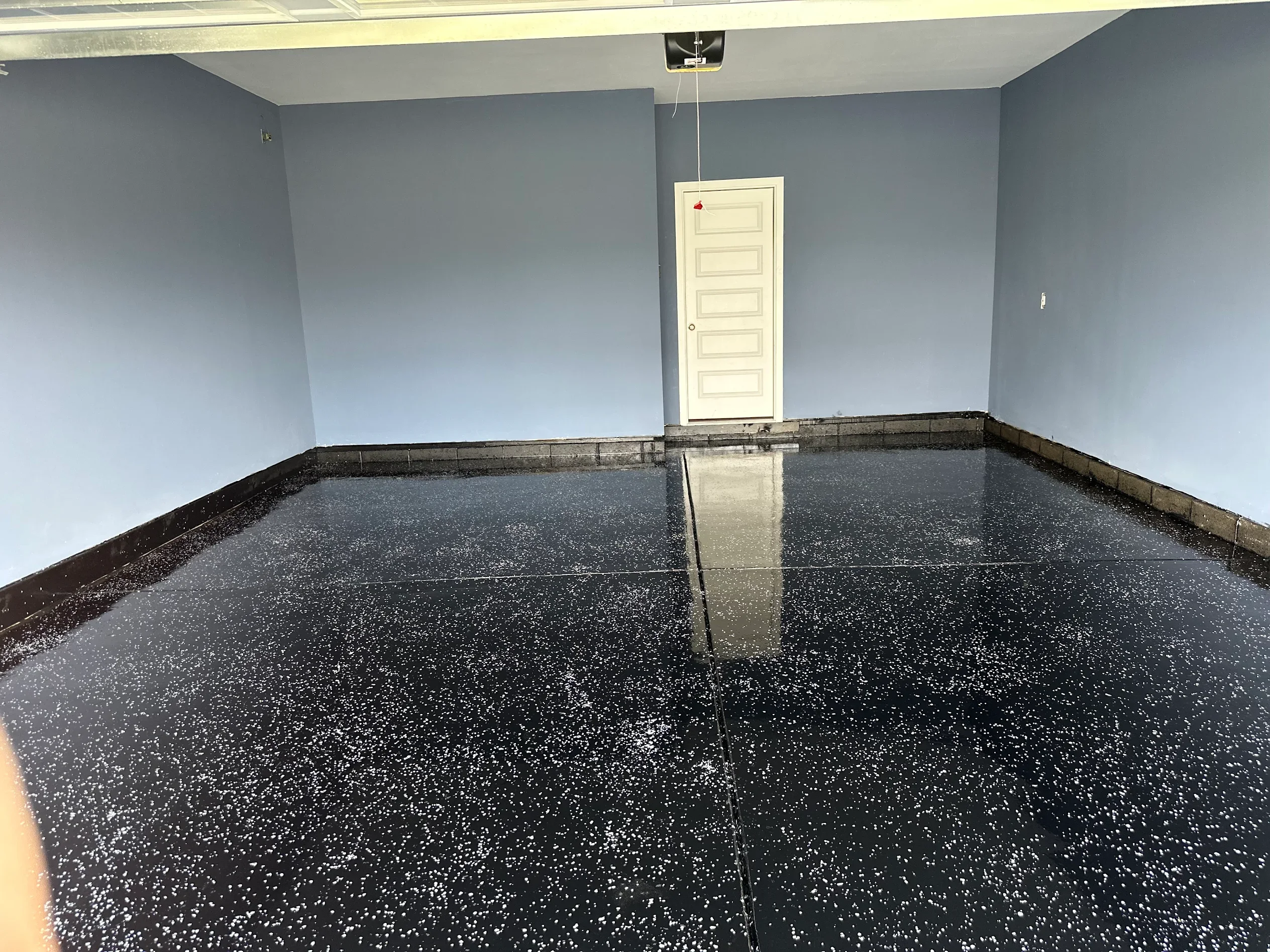
- Midnight black with white/silver flake: Dramatic and striking — especially in high-end homes or when the goal is a showroom look.
- Warm charcoal: A versatile middle ground that works with almost any home color scheme.
- Solid colors (no flake): Cleaner look, less texture. Popular for workshops and commercial spaces.
How Long Does Garage Epoxy Installation Take?
With a polyaspartic system, most 2-car garages can be completed in a single day — you can park on it again within 24 hours. Standard epoxy systems require 3–5 days for full cure before driving on them. We recommend polyaspartic for this reason alone.