
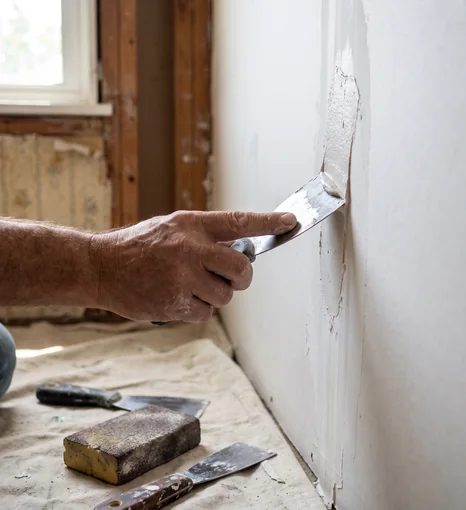
Quick answer: Drywall is often where a problem becomes visible, not where it began. A clean patch is useful after the cause of a stain, crack, or hole has been understood.
Sort cosmetic damage from active damage
A doorknob hole is different from a recurring stain or a crack that grows. Explain the history rather than only pointing at the visible spot.
Ask what needs to be opened
If moisture, plumbing, wiring, or structure is involved, access may be required before a repair plan is final. Know what will be restored afterward.
Related service: Drywall repair.
Plan the finish match
Texture, sheen, trim, and paint can make a small repair look larger. Ask where a feathered repair ends and what paint scope is included.
Do not cover an unresolved leak
If moisture is still present, get the source addressed first. Closing the wall early can turn a visible clue into a hidden problem.
Before you move forward
Keep the scope, selections, approvals, and any project changes in writing. If a claim about availability, licensing, insurance, price, timing, or warranty matters to your decision, request it directly and retain the documentation.