Test the daily handoff
Write two short scenes: the room during its first use and during its second. Where does the work equipment go when guests arrive? What happens to exercise mats before a family movie? If every transition requires moving heavy furniture, the room may serve only its easiest use. Make the storage location part of the plan.
Distinguish flexibility from compromise
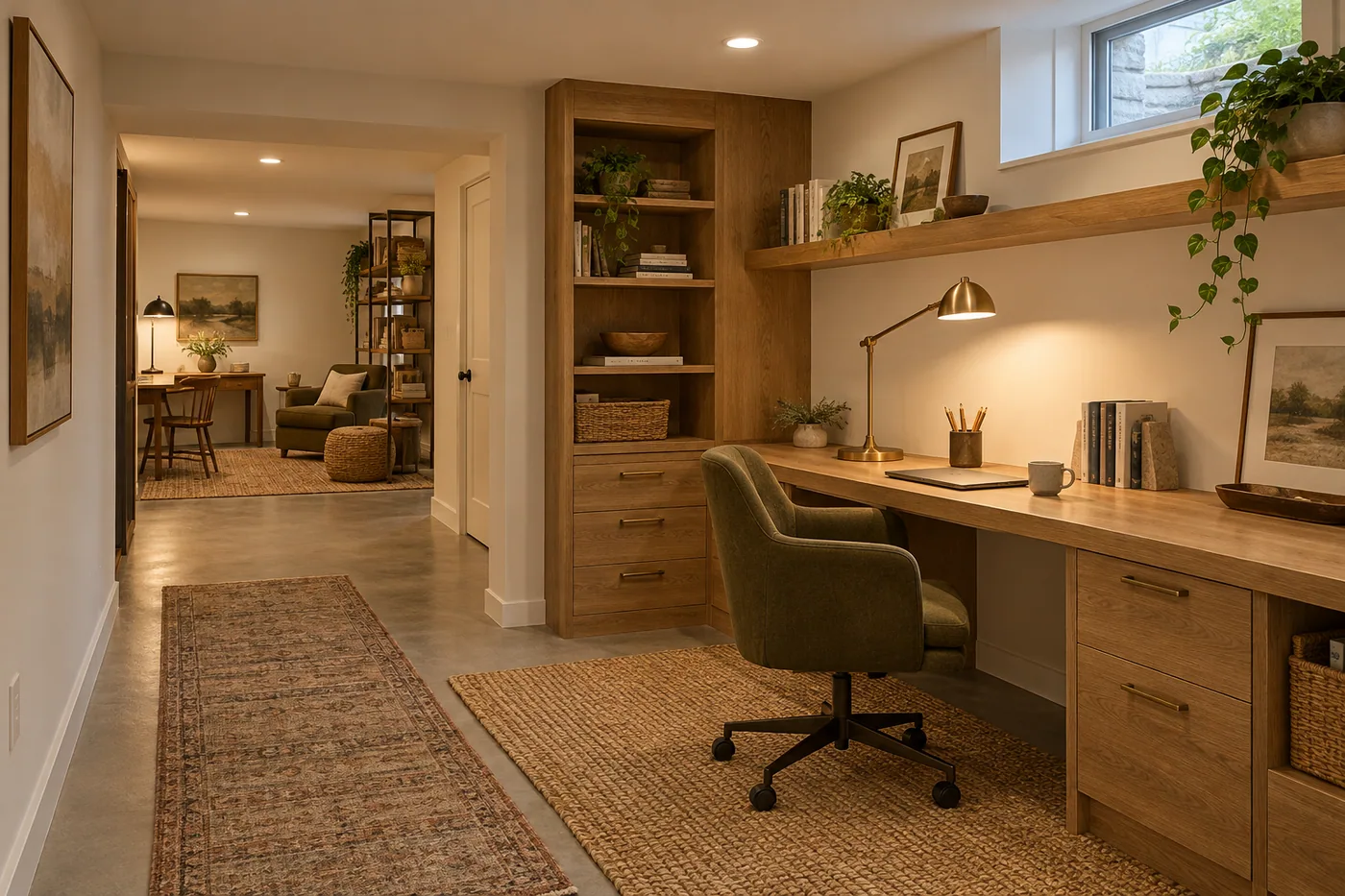
A movable table can be genuinely useful; a desk beside a television may still fail during a work call. Compare privacy, sound, lighting and storage needs separately. Choose which use has priority when both happen at once. Sometimes a modest enclosed work area plus a flexible main room is better than asking the whole basement to switch roles.
Turn the concept into a site-specific brief
Write the actual reset sequence between the room’s two main uses. Include the equipment that needs a storage position, the items too heavy to move and the activity that must retain privacy. Ask the contractor whether a dedicated small zone would remove a daily compromise more effectively than movable furniture across the entire room.
Your next steps
- Describe both uses.
- List what must move between them.
- Choose a place for stored equipment.
- Decide which use wins a conflict.
Homerix planning resources help you prepare questions. Confirm site conditions, requirements and construction decisions with the appropriate contractor or authority. Room images are generated design inspiration.